China Camp State Park
If you've never been to China Camp and you live anywhere near the Bay Area, you're missing out on something genuinely special. I knew going in that it was a state park with some history, but I wasn't prepared for how much the place would stick with me.
China Camp sits right on the shore of San Pablo Bay, just a few miles east of San Rafael. Pull off North San Pedro Road and the first thing that hits you is how quiet it is — you're maybe 20 minutes from downtown San Rafael and it feels like you've crossed into a completely different world. Bay views, oak woodlands, marsh, birds everywhere.
The village is the last surviving Chinese shrimp-fishing settlement of about two dozen that once dotted San Francisco Bay. That fact alone is worth the drive.
The real draw is China Camp Village itself — a preserved Chinese-American shrimping community that dates back to the 1860s. At its peak in the 1880s, around 500 people lived here, catching and drying shrimp to ship to China and Hawaii. You can wander through the old wooden buildings, walk the pier, and get a real sense of what this place was. The small museum does a great job of telling the story of the Quan family, who were the last residents and kept shrimping here well into the 20th century.
There are about 15 miles of trails looping through the park — oak woodlands that climb up to San Pablo Ridge with sweeping views of the entire Bay Area. I did a solid couple of hours of hiking and barely scratched the surface. If you like mountain biking or just want to get some mileage in on a beautiful morning, this place delivers.
Honestly, China Camp is the kind of place I'll keep going back to. History, hiking, bay views, and a quiet that you just can't manufacture. Highly recommend.
Black Chasm Cavern
About an hour east of Sacramento off Highway 49, Black Chasm Cavern sits just outside the tiny Gold Rush hamlet of Volcano. I'd driven past the area plenty of times heading up to the foothills but had never stopped. That changes now — this place is incredible.
The cave itself is vertical rather than horizontal, which gives the tour a completely different feel than most caverns. You descend via a spiral staircase about 70 feet into the main room, stopping at three platforms along the way. The guided tour runs about 50 minutes and covers the geology, history, and the wild collection of formations — stalactites, stalagmites, cave bacon, soda straws, flowstone, draperies. But the real stars are the helictites.
Helictites are calcite formations that basically ignore gravity — they twist and curl in all directions, looking almost like crystals growing sideways out of the cave walls. Black Chasm has them in extraordinary abundance.
The Landmark Room (the third and largest platform) is jaw-dropping. You're standing in a chamber about 39 feet high, covered in helictites in every direction. I just stood there for a while taking it in. The guides are genuinely knowledgeable and make it fun — they point out formations that look like angels' wings, cave coral, you name it. The cave also has an underground lake in its lower levels and is home to a species of eyeless arachnid found nowhere else on earth. Only at Black Chasm. Pretty wild.
If you're going to do one cave in Gold Country, make it this one. But honestly, pair it with California Cavern and make a day of it — they're operated by the same folks and they're very different experiences.
California Cavern
Here's a piece of California trivia worth knowing: California Cavern in Cave City was the very first show cave in the state. When it opened for tours in 1850 — just a year after the Gold Rush exploded — admission was reportedly a pinch of gold dust. It's been welcoming visitors ever since, which makes it feel like a living piece of history in a way that's hard to replicate.
The drive out to Cave City Road is about 15 minutes from Black Chasm and worth noting — it gets narrow and winding as you close in, but the scenery through the oak hills is gorgeous. The parking area opens up to a charming visitor center and gift shop where you meet your guide.
Mark Twain, Bret Harte, and John Muir all visited California Cavern. Muir wrote about it in Mountains of California in 1894. That's not a bad roster of previous guests.
Unlike Black Chasm's vertical drama, California Cavern is a horizontal system — you're moving through a network of connected chambers and passageways. I skipped the standard walking tour and went straight for the Mammoth Cave Expedition, which clocked in at about 2.5 hours. It was absolutely worth it — but I want to be real with you about what you're signing up for.
The history here is almost surreal. Early settlers didn't just tour this cave — they used it. Wood floors, walkways, bar service inside. They hosted weddings, concerts, church services, and dances in the cavern chambers. I kept imagining what that must have been like — candlelight bouncing off stalactites, a fiddle echoing through the passages. Another era entirely.
Practical must-knows before you go:
✦ They have a hose-off area, changing facilities, and a shower on-site after the tour — so you can clean up before getting back in your car. That said, still pack a full change of clothes including shoes. You'll want them.
✦ Plan your bathroom visit and water intake carefully before descending. There are no restrooms inside the cavern — and with a 2.5-hour tour, that's not a detail you want to discover after the fact. Use the facilities before you go in, and go easy on the water beforehand.
If you're pairing both caves in a day, do California Cavern second. Black Chasm will dazzle you with formations, and California Cavern layers on the history and a completely different — and far more physical — underground experience. Just know what you're getting into before you book the expedition tour.
Jack London State Historic Park
I'll be honest — Jack London State Historic Park was not somewhere I expected to feel genuinely moved. I knew the broad strokes: Jack London, Call of the Wild, Sonoma Valley. But spending a few hours here has a way of reframing the man entirely. This is one of those parks that sneaks up on you.
London called his property in Glen Ellen "Beauty Ranch," and that's not hyperbole. The 1,400-acre park sits in the rolling hills of Sonoma Valley surrounded by redwood groves, vineyards, and oak woodlands. London bought the land in 1905 and spent the last decade of his life here, farming, writing prolifically, and dreaming of building his dream home.

The park trail map — more ground to cover than you'd expect
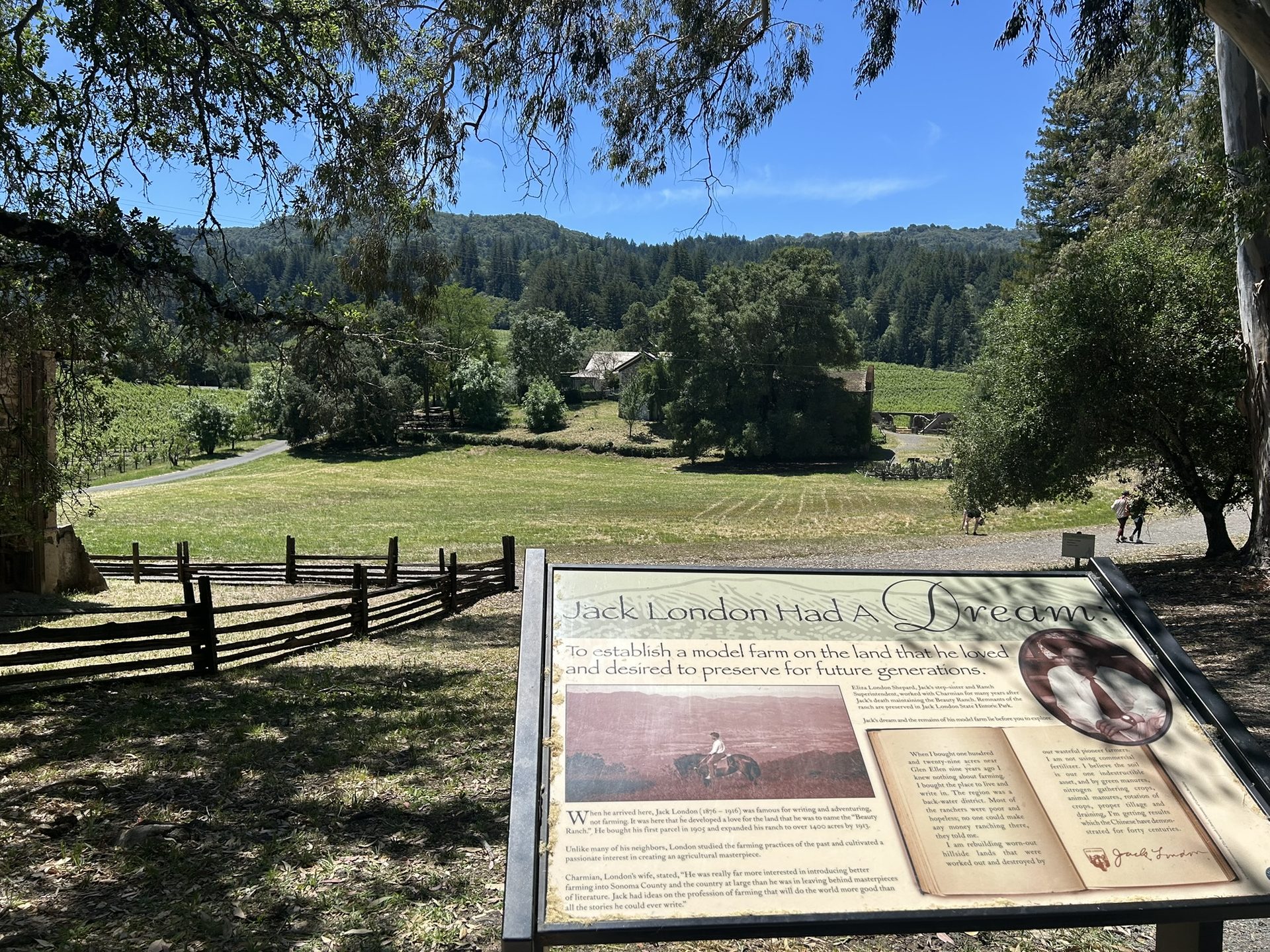
"Jack London Had a Dream" — to establish a model farm on this land and preserve it for future generations. The view behind the sign tells the whole story.
"Who knows what Romance, what Adventure, what Love, is lurking around the next turn of the road, ready to leap out on us if we'll only travel that far." — Jack London, inscribed at the park entrance
London was a visionary farmer as much as he was a writer. He studied agricultural techniques from around the world, terracing his hillsides to prevent erosion — a practice he'd observed in Asia — and building what he believed would be a model ranch for California.
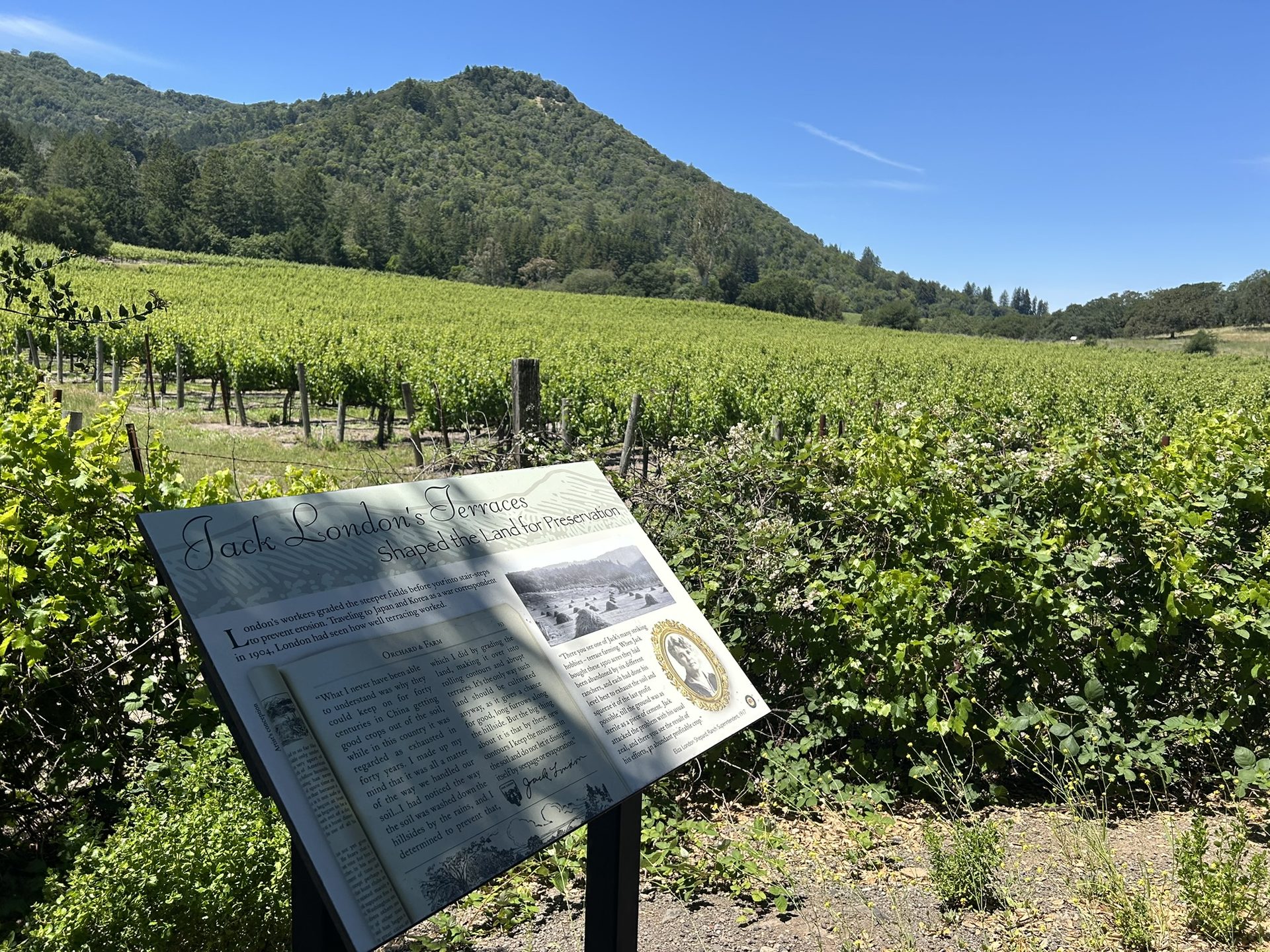
Jack London's terraced vineyards — shaped to prevent erosion, still producing grapes today
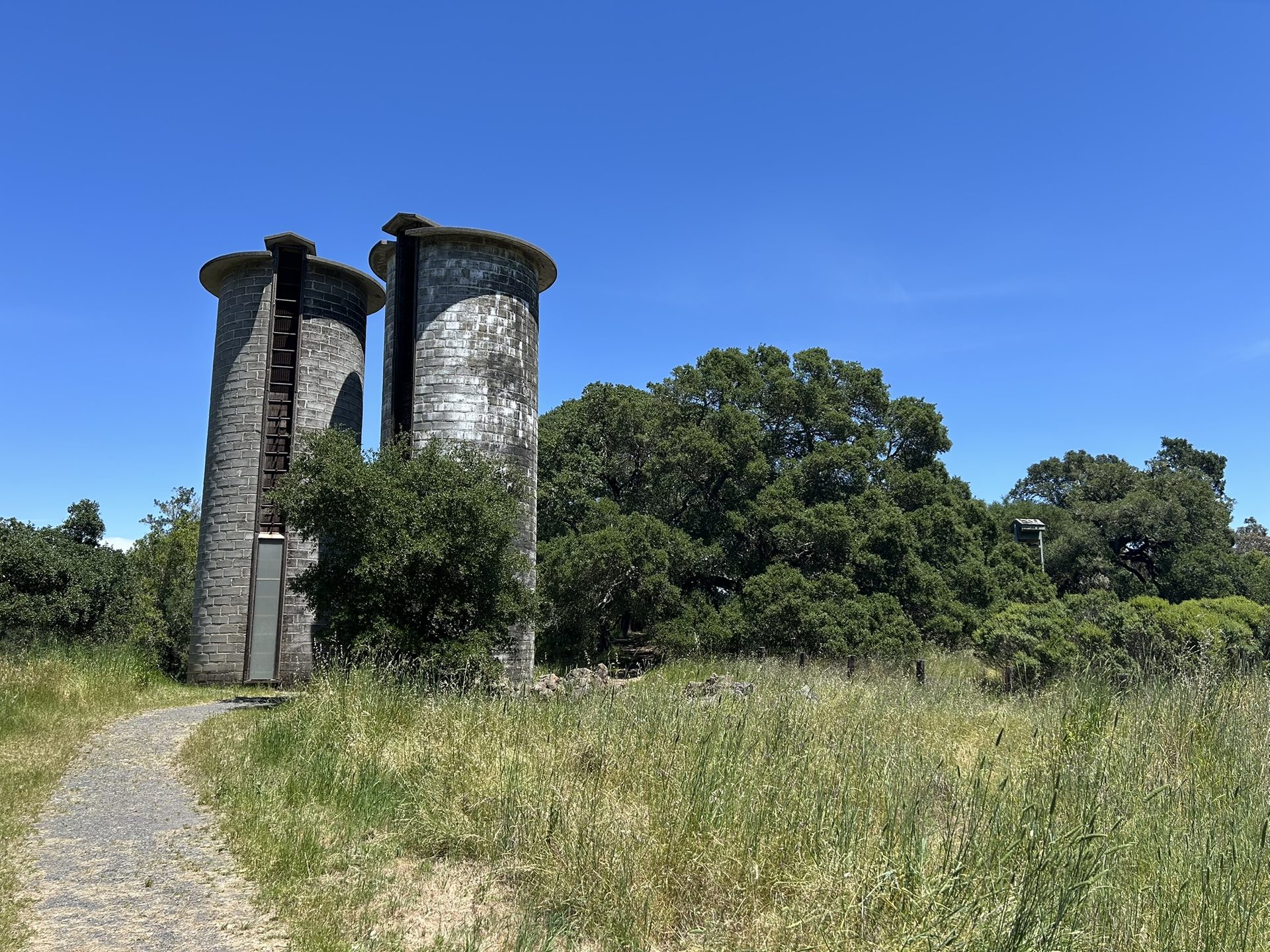
The twin silos of Beauty Ranch — a cinematic landmark on the property. Tolkien fans will understand the filename. 😄
And then there's the Pig Palace. Genuinely one of the most interesting agricultural structures I've encountered — London built it with a central circular design to house 200 pigs efficiently, with drainage, ventilation, and a dedicated caretaker's area. He was obsessed with raising the finest livestock, not just functional animals.
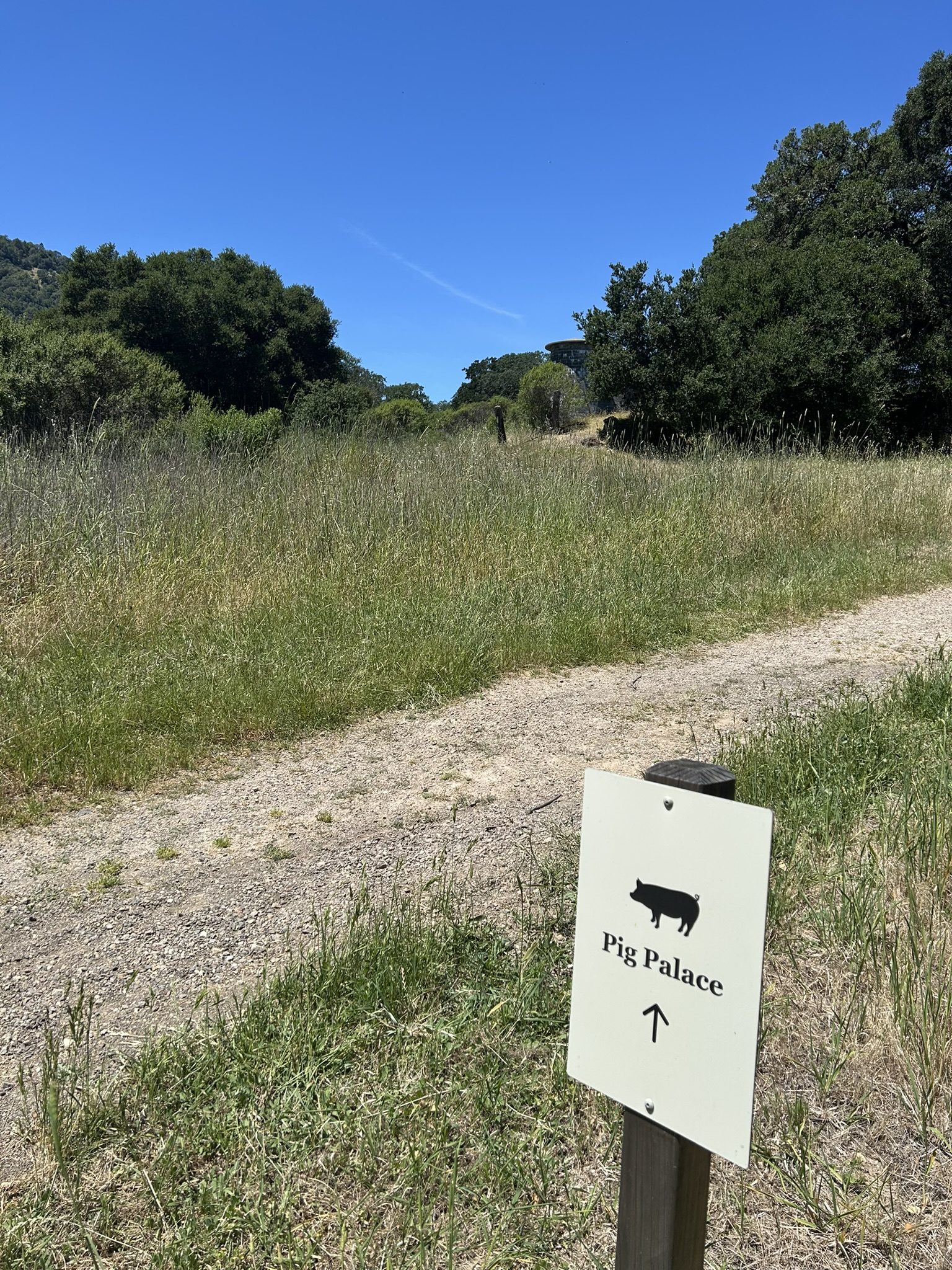
This way to the Pig Palace — not your average farm sign
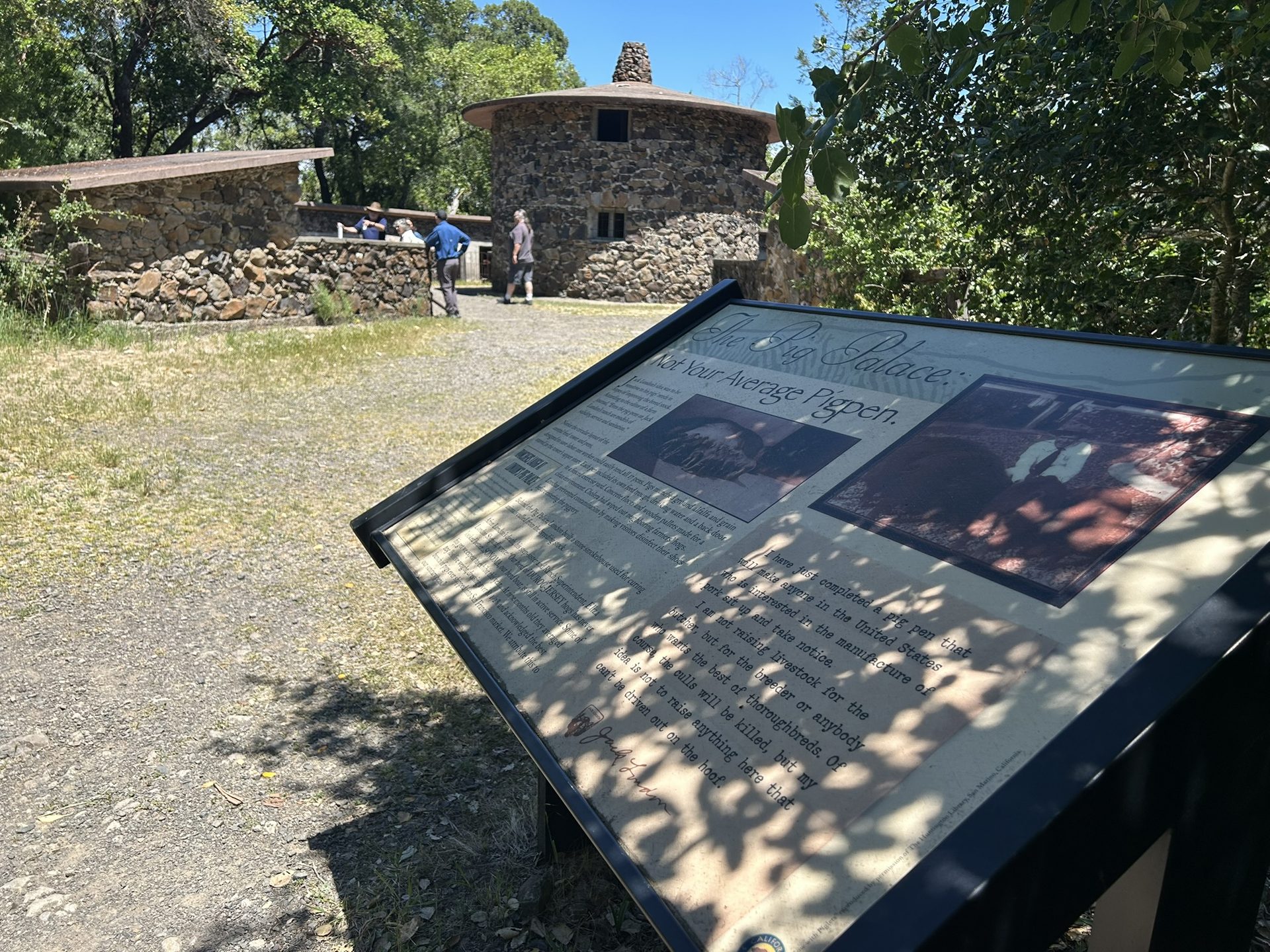
The Pig Palace — "Not Your Average Pigpen." London's own words on the sign say it all.
And then I came across the General Ranch Rules — a formal document signed by Jack London himself, laying out the expectations for every man working on the property. Tools must be returned. Lights must be turned off. No dogs allowed. No fishing in the lagoon. Rooms must be kept clean.

Jack London's General Ranch Rules — signed by the man himself. As a Greenlee who grew up under similarly strict household rules, this one hit close to home. 😄
The House of Happy Walls was built by Charmian after Jack's death and is now a museum filled with artifacts and memorabilia — including items they brought back from a 27-month sailing voyage across the Pacific aboard their boat, the Snark. The man lived several lifetimes' worth of adventure.
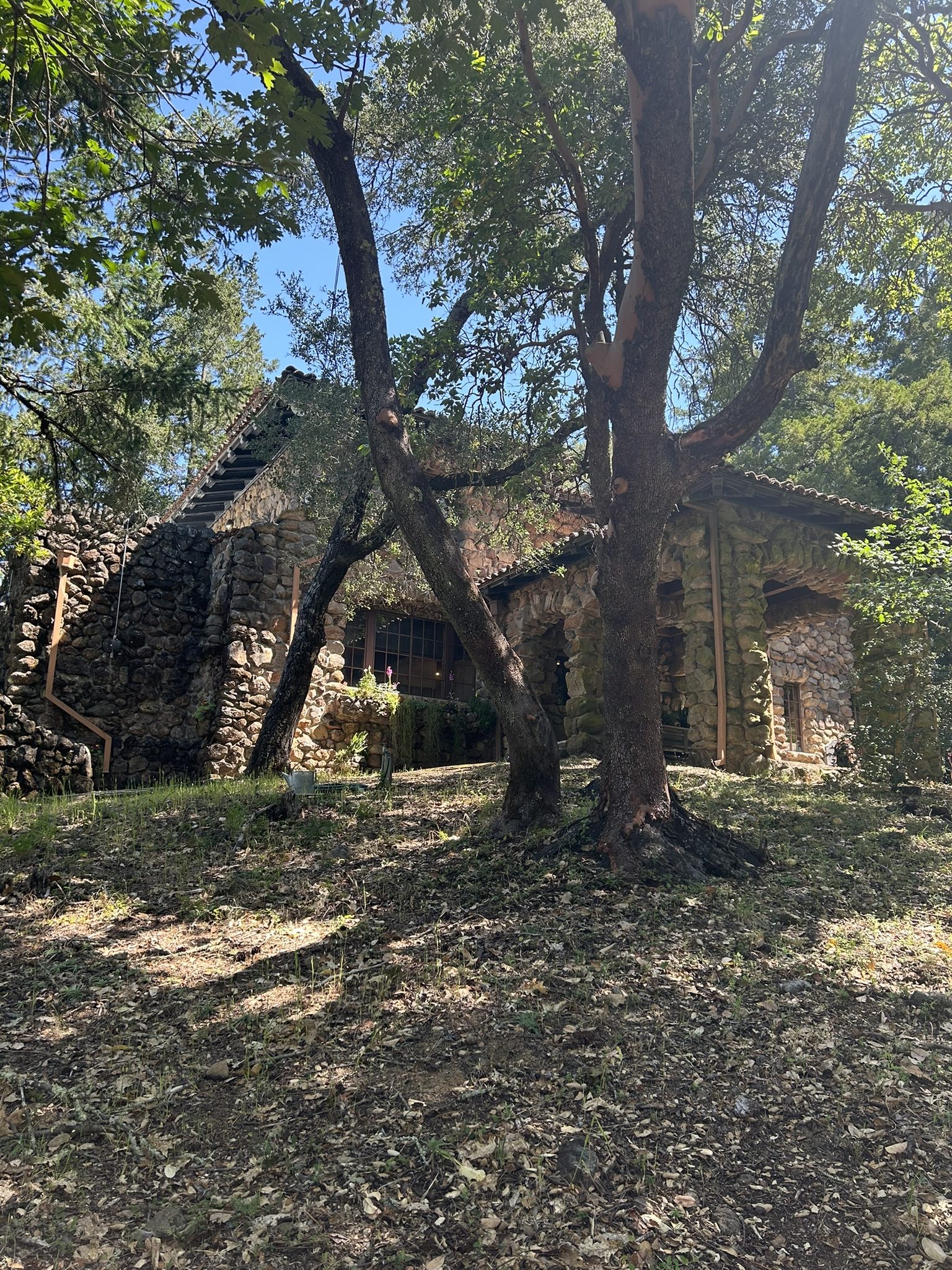
The House of Happy Walls — built by Charmian London after Jack's death, now a museum
Inside the museum, one display that stopped me cold was the athletic equipment collection — fencing gear, boxing gloves, a foil. London was as physical as he was literary: boxing, surfing, horseback riding, sailing. He and Charmian boxed each other daily. The man truly did not sit still.
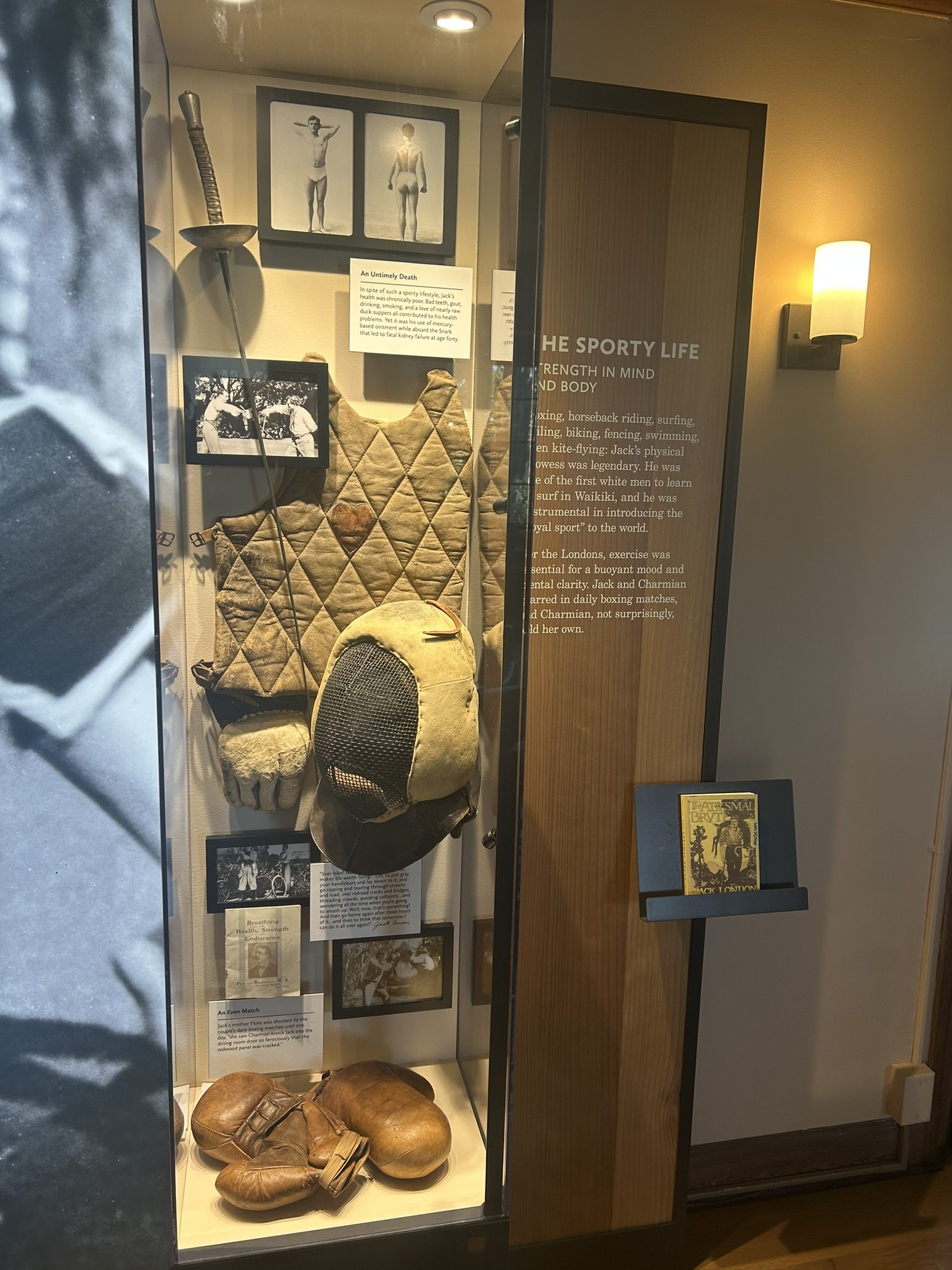
Jack London's sporting life — fencing gear, boxing gloves, and a foil on display. He sparred with Charmian daily and was one of the first white men to learn to surf in Waikiki.
There's also a fascinating and little-known chapter of London's early life on display — his mother Flora was deeply involved in spiritualism, following a spiritualist named Jung and involving young Jack in séances as a boy. Rather than inspiring wonder, it had the opposite effect: London was so put off by the experience that he remained a committed materialist and skeptic for the rest of his life.
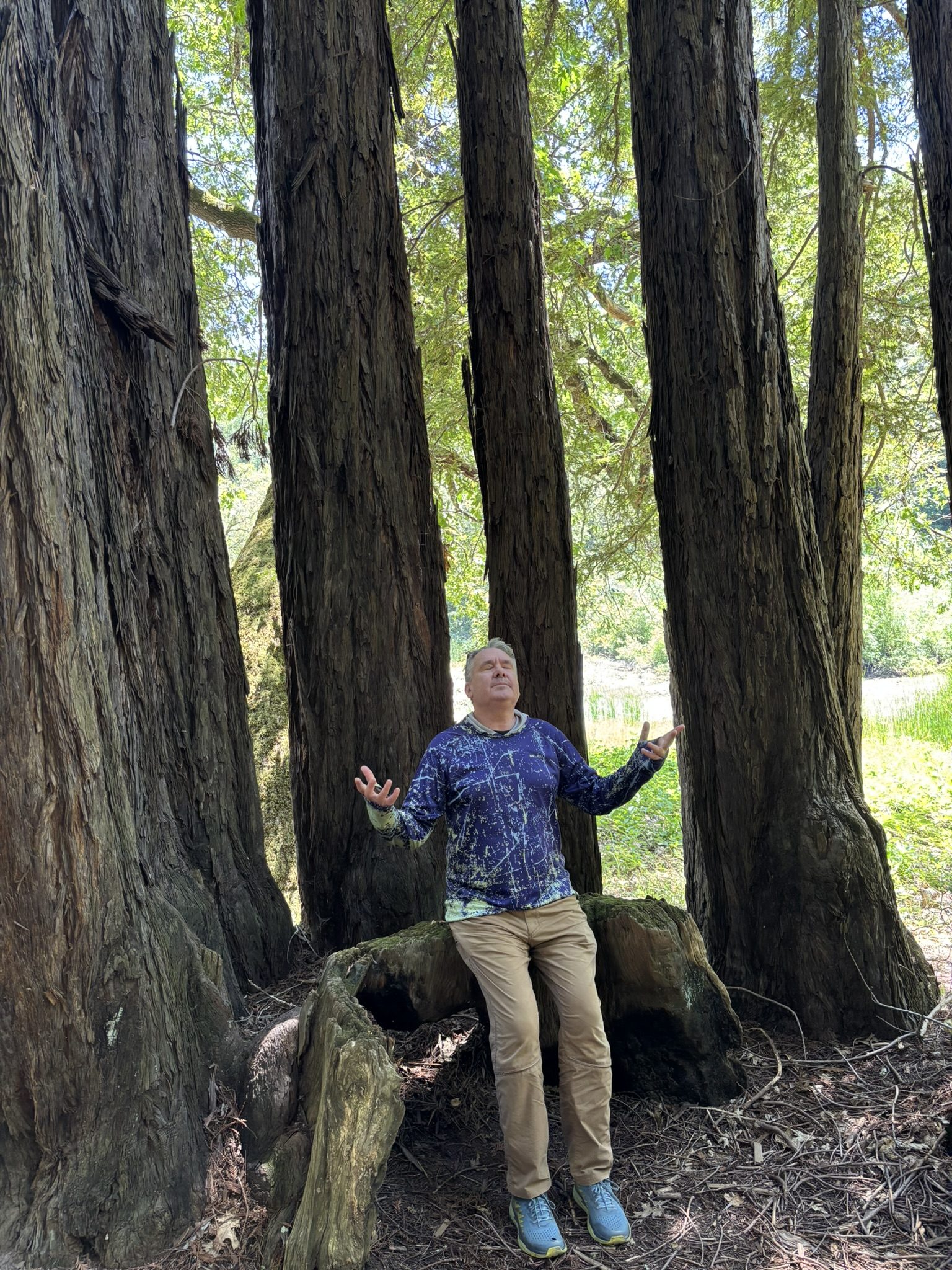
Flora London's spiritualist pursuits — including séances with young Jack — turned him off the spiritual life entirely. He remained a skeptic until his death at 40.
The grave site is one of the most quietly moving stops in the park. A simple wooden-fenced knoll where Jack's and Charmian's ashes are interred beneath a red boulder — exactly as London had casually requested to Charmian and his sister Eliza years before his death.

The London and Greenlaw Gravesites sign — the graves of the Greenlaw children inspired London to request his ashes be buried on the same knoll. As a Greenlee — whose father is a retired Sergeant of the South Lake Tahoe Highway Patrol — I couldn't help but appreciate the near-identical names. Greenlaw. Greenlee. One family left behind children's graves. The other left behind a lawman. History has a sense of humor. 😄
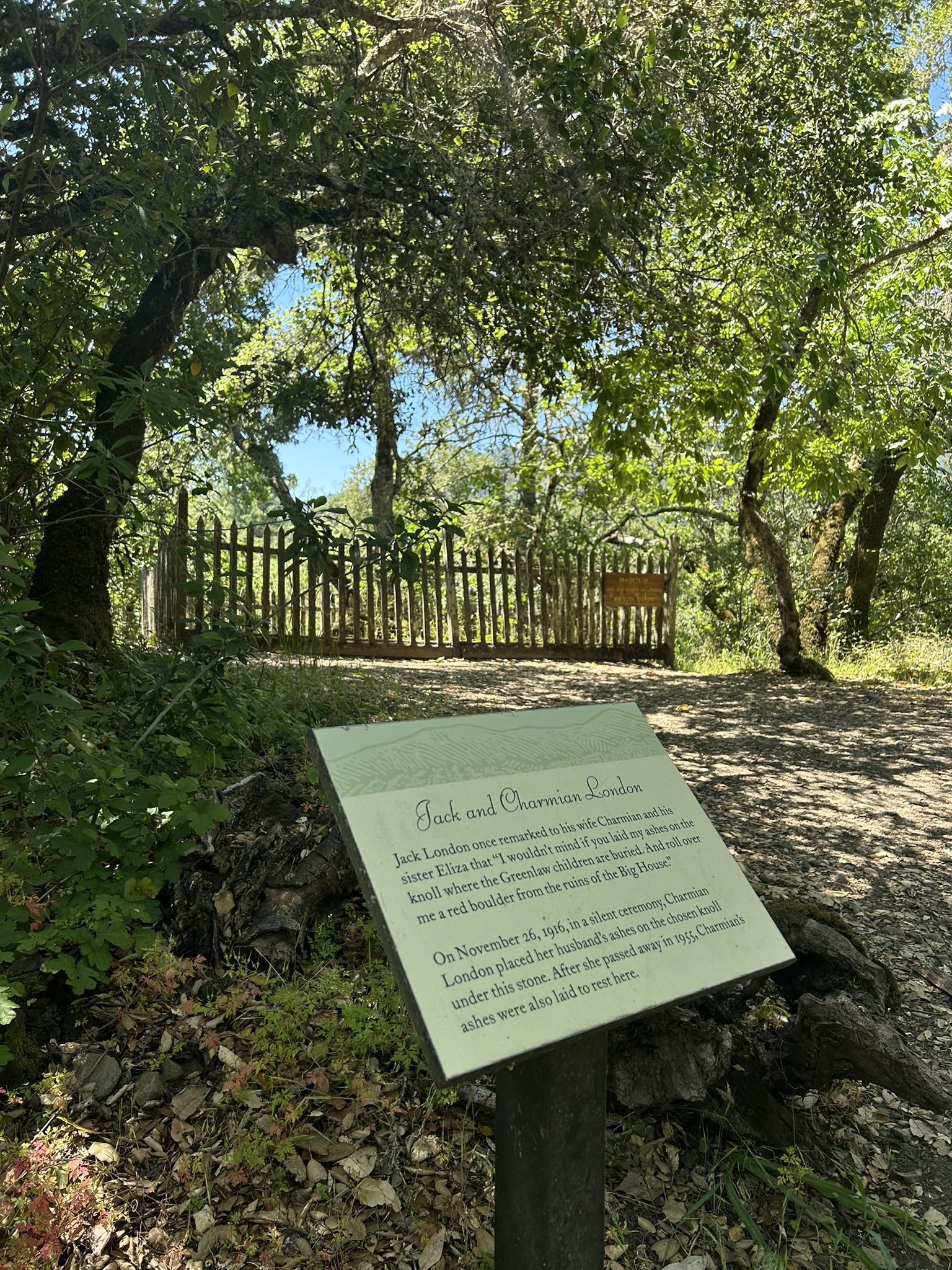
Jack London once told Charmian: "I wouldn't mind if you laid my ashes on the knoll where the Greenlaw children are buried." On November 26, 1916, she did exactly that.
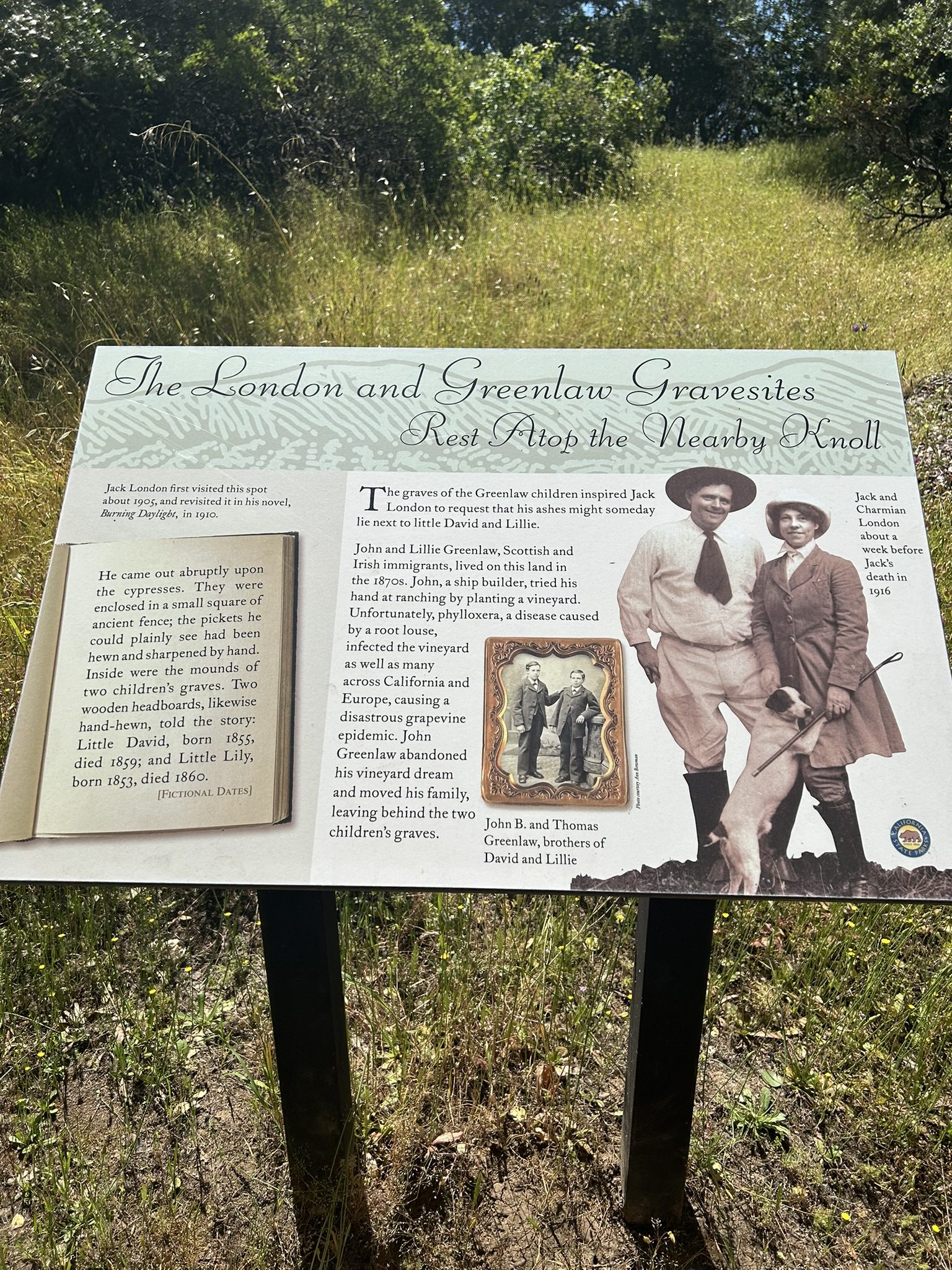
Gravesite of Jack and Charmian London and Eliza Shepard — quiet, simple, and utterly in keeping with the man
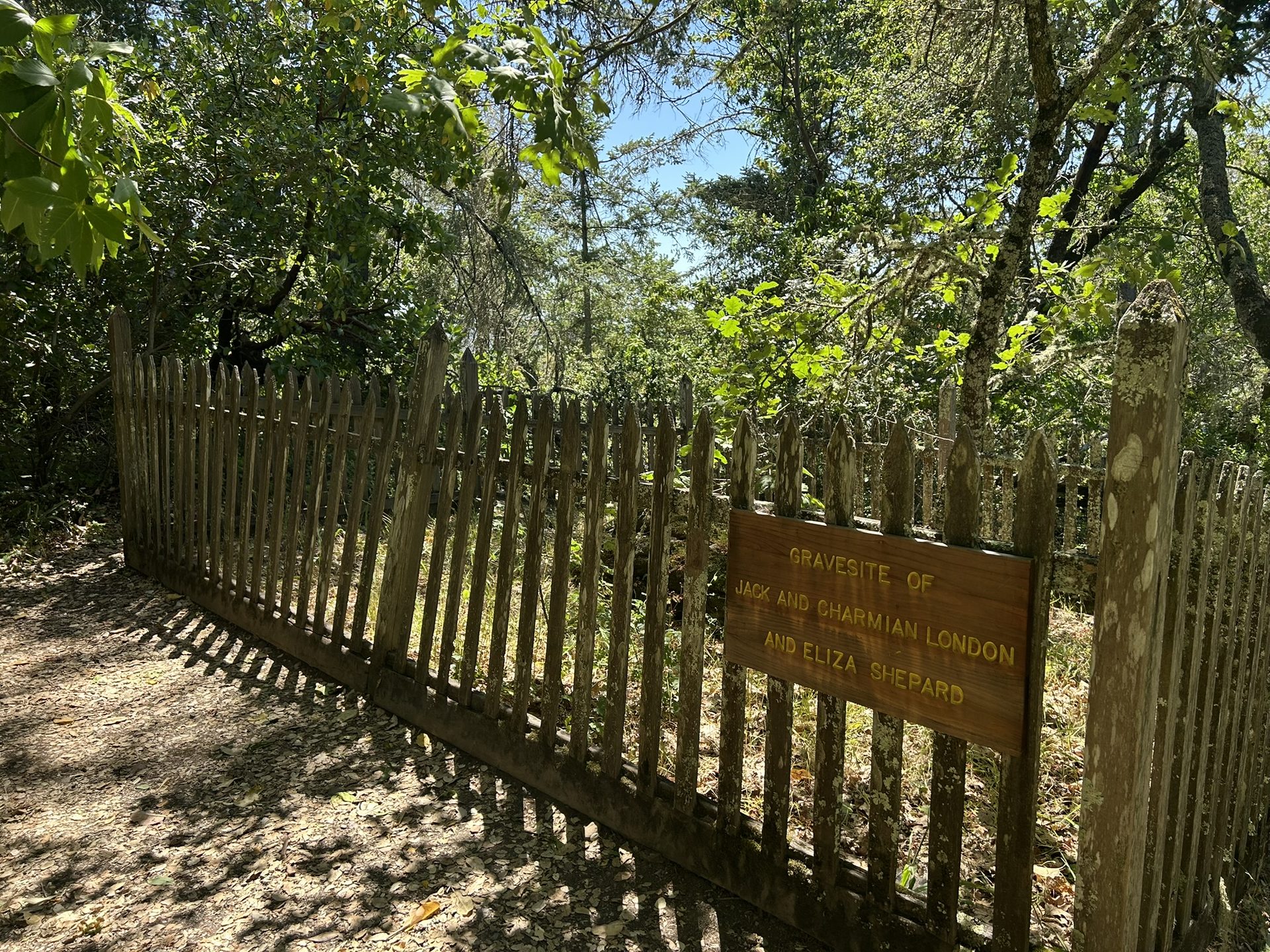
The grave site itself — overgrown and peaceful, exactly as nature intended
The Wolf House is the emotional center of the park. London poured everything into it — his dream home, 15,000 square feet of volcanic rock and redwood, designed to stand a thousand years. It burned one month before he was to move in. He never recovered from the blow, and died three years later at 40.
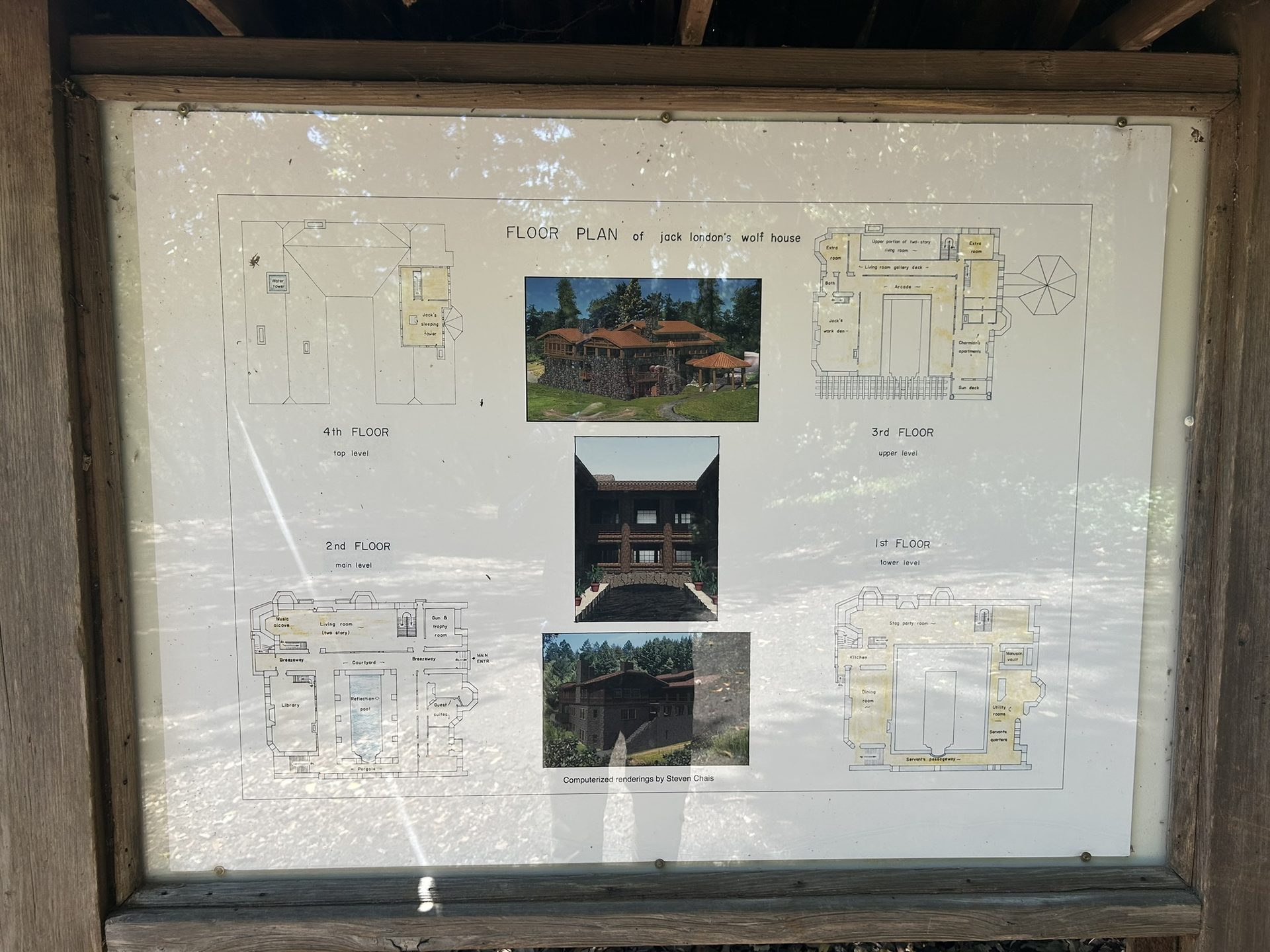
The Wolf House floor plan — four stories, 26 rooms, 9 fireplaces. A vision that never got to be lived in.
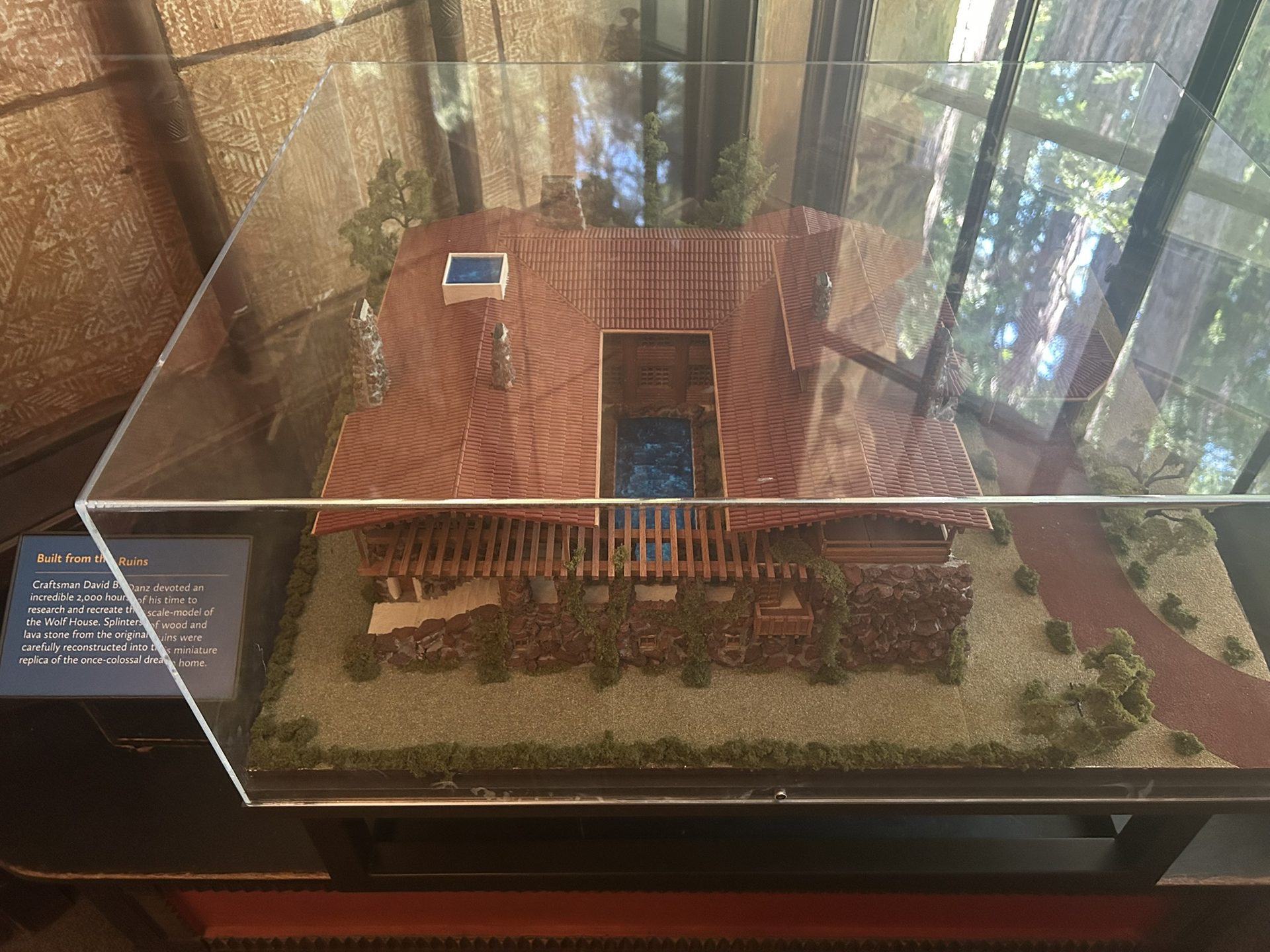
A scale model of the Wolf House as it would have appeared — craftsman David B. Danz devoted 2,000 hours recreating it using splinters of wood and lava stone from the original ruins
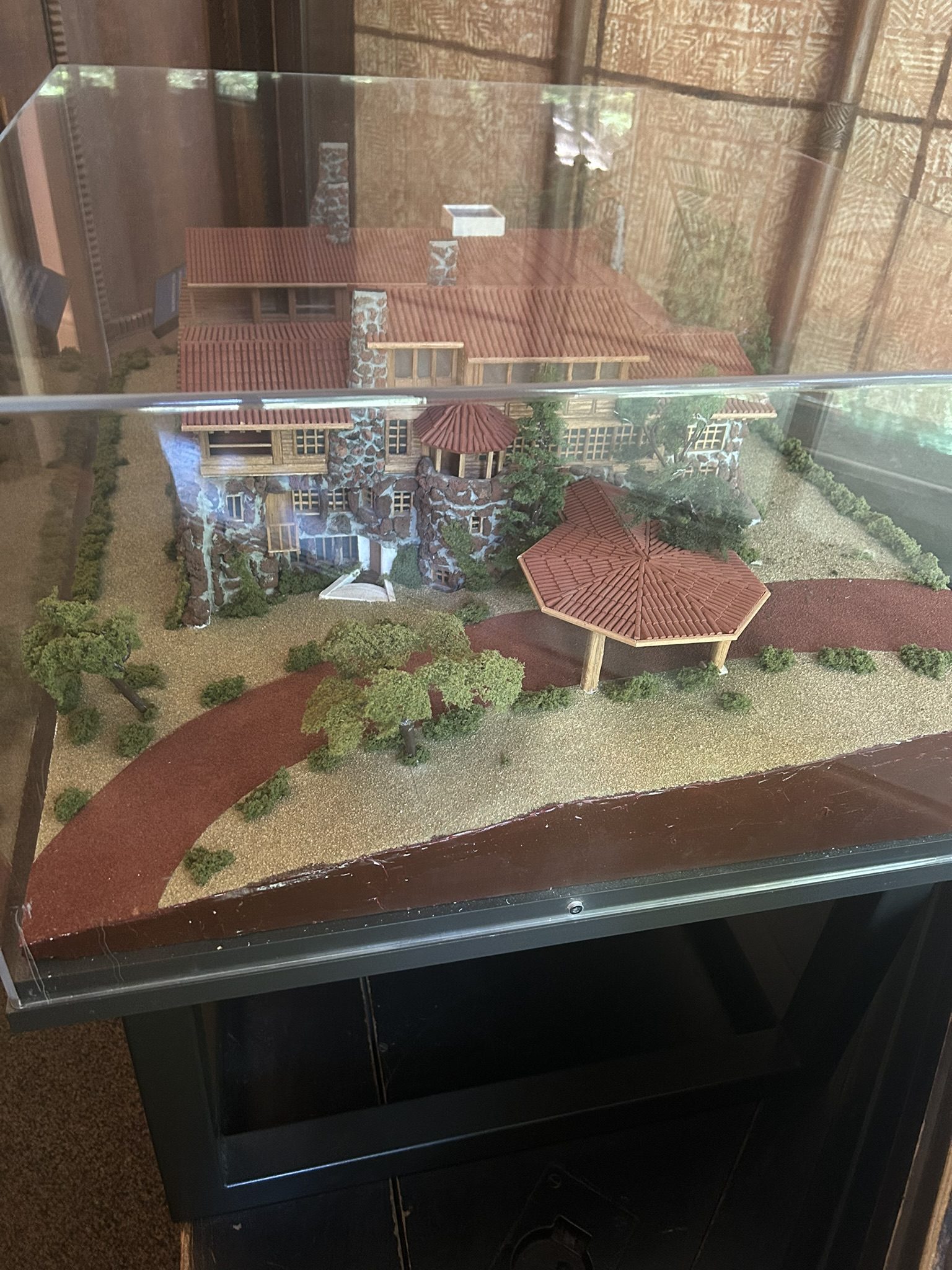
The full grounds layout — you can see just how grand London's vision was
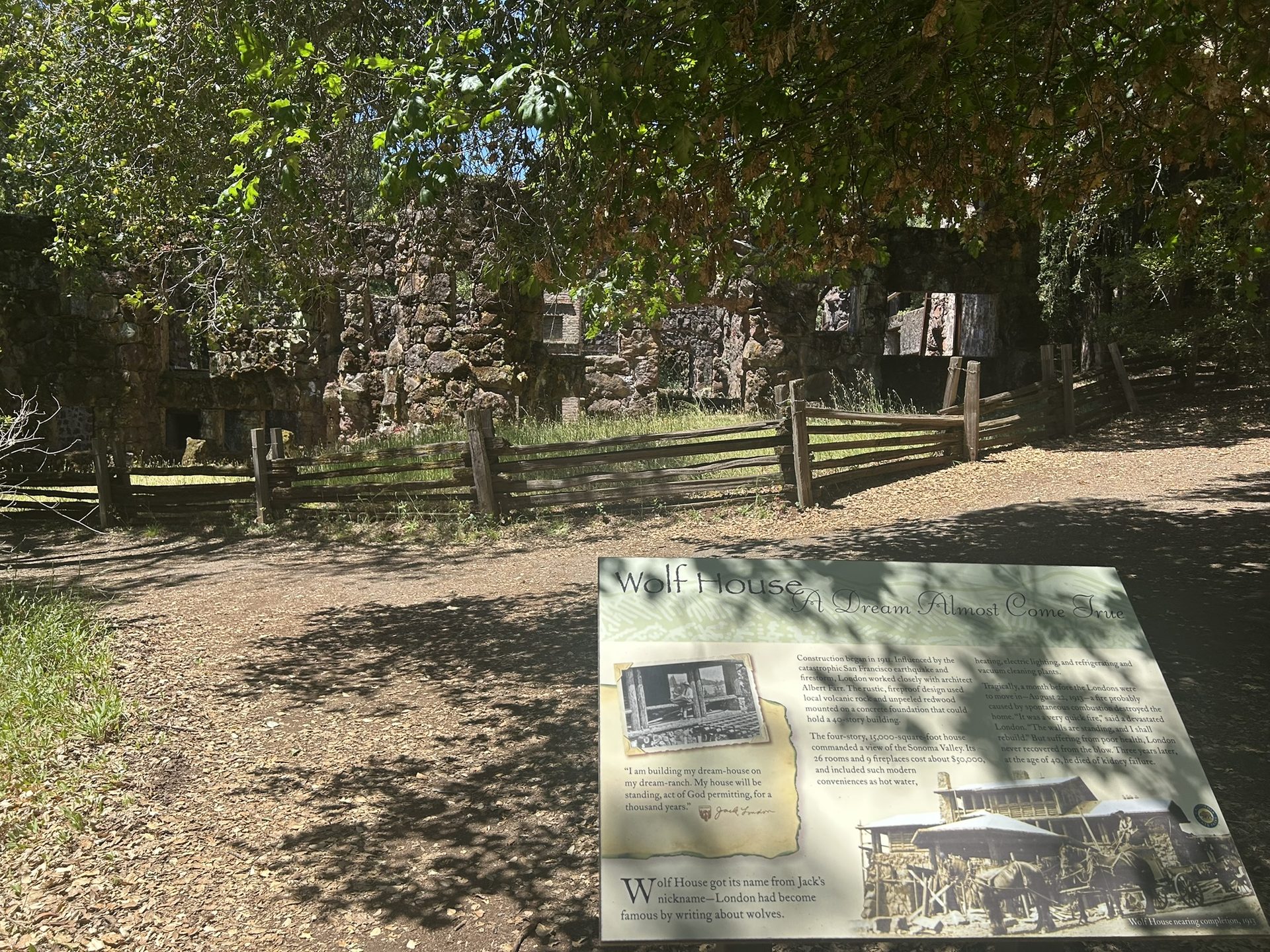
"I am building my dream-house on my dream-ranch. My house will be standing, act of God permitting, for a thousand years." — Jack London. It burned in 1913.

What remains today — the volcanic stone walls refused to fall, even after the fire. Haunting and beautiful in equal measure.
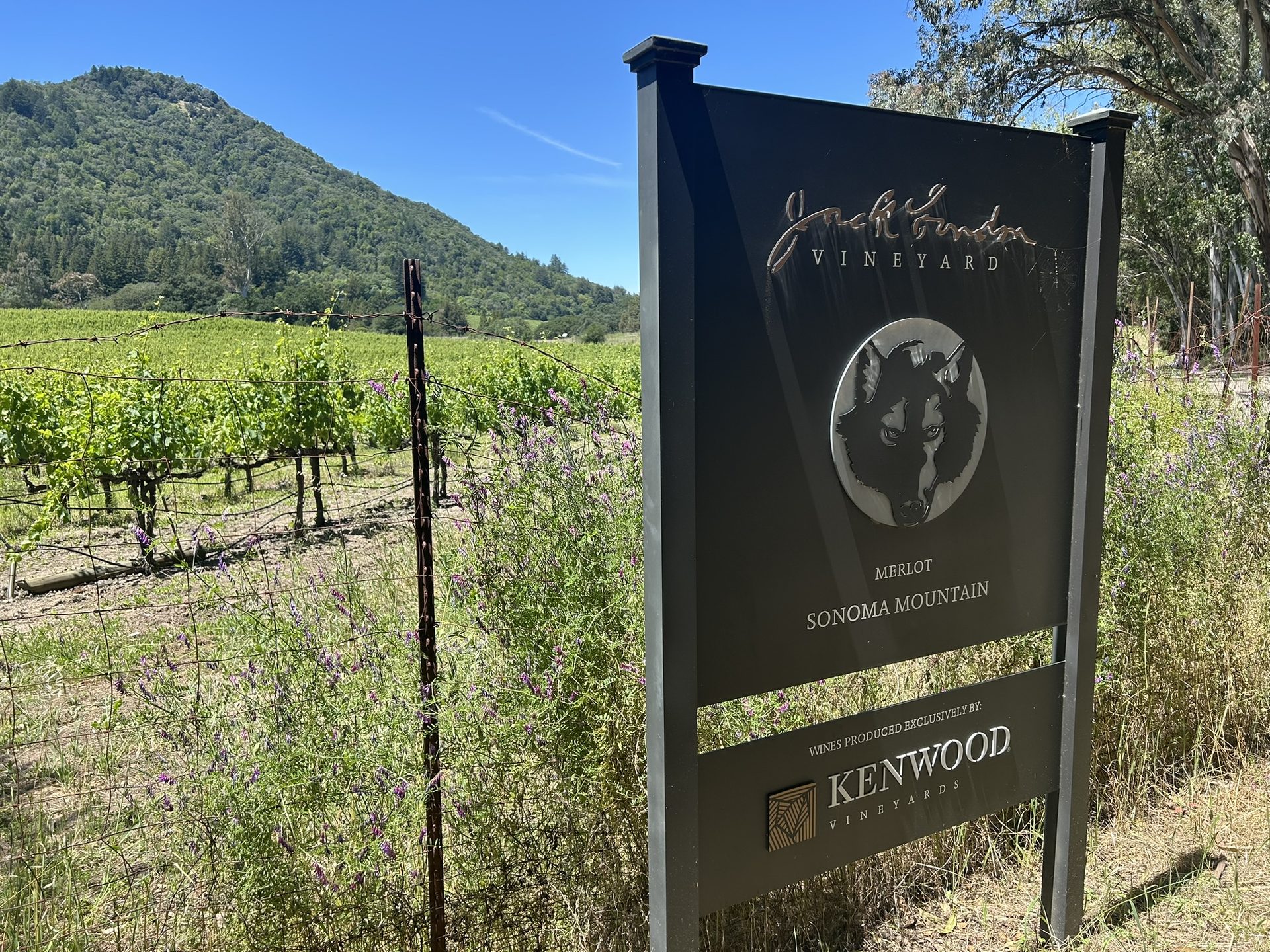
The Jack London Vineyard — Sonoma Mountain Merlot, produced exclusively by Kenwood Vineyards. London's agricultural legacy lives on in every bottle.
The Wolf House ruins and reflecting pool — Glen Ellen, Sonoma County
The trails beyond the main landmarks are worth exploring if you have time. London Lake was seasonally dry on our visit — a little anticlimactic but still a beautiful walk through the woods.
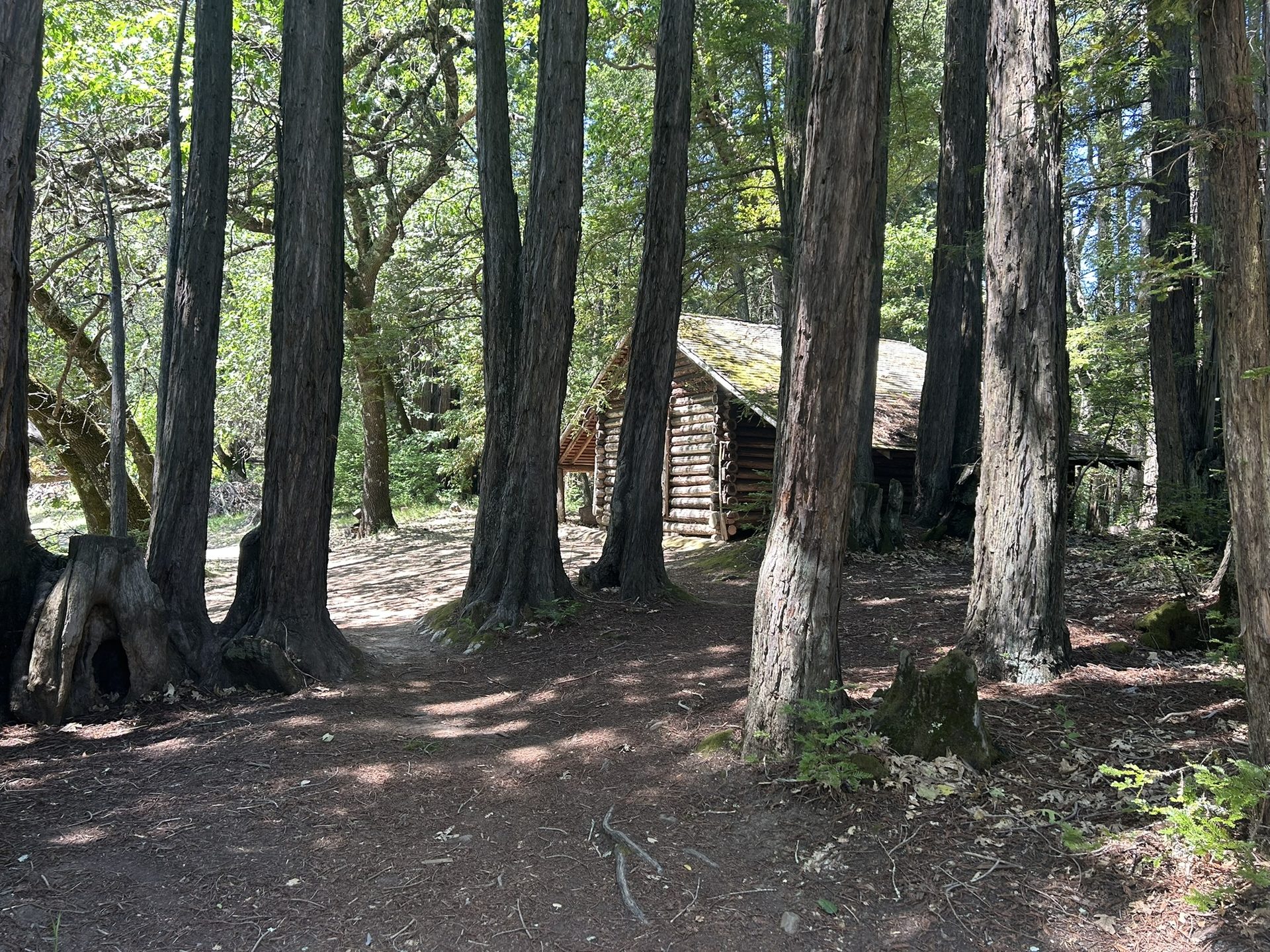
A log cabin glimpsed through the redwoods on the trail — the kind of scene that makes you feel like you've stepped back 100 years
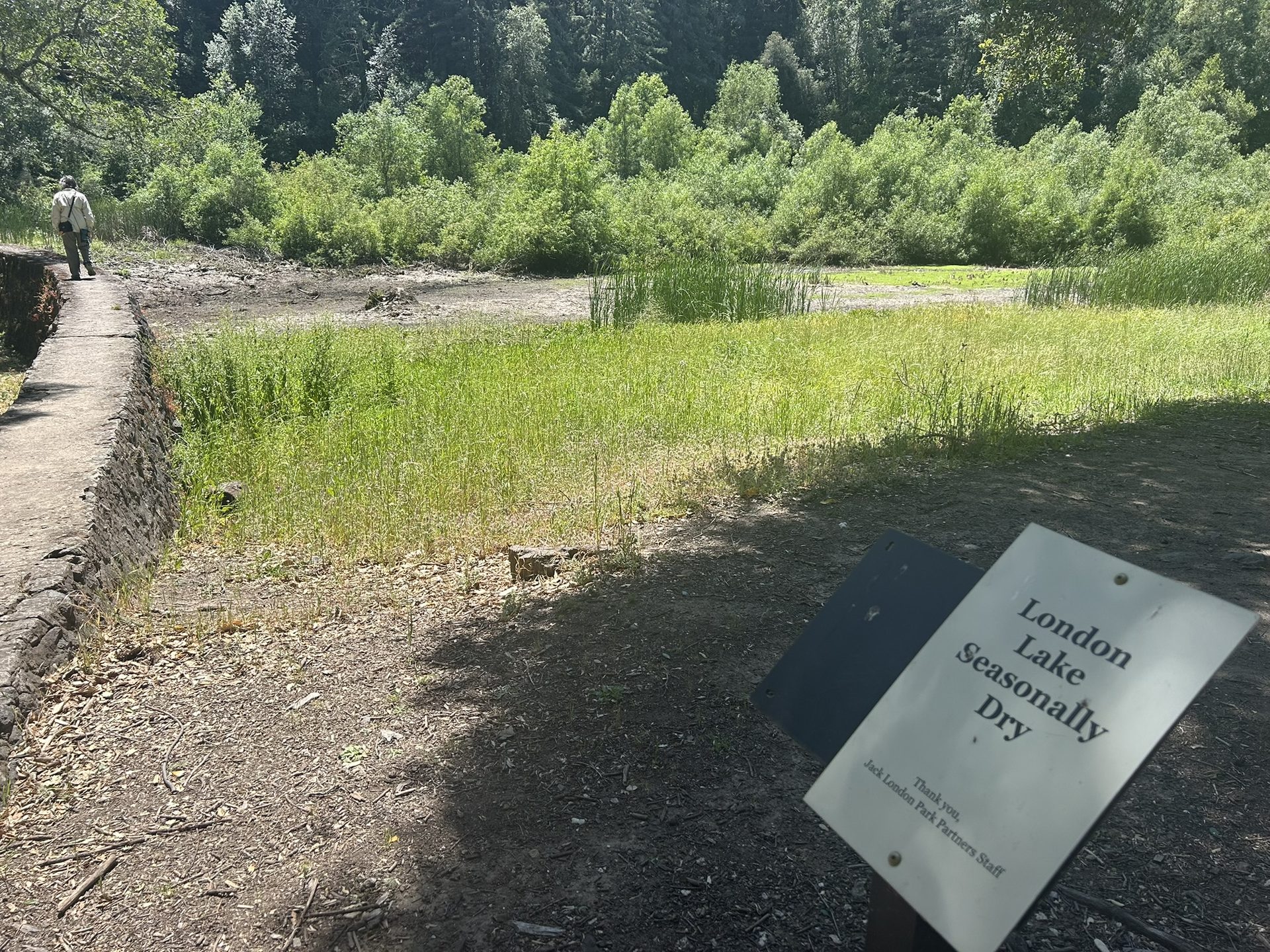
London Lake — Seasonally Dry. No fishing today. Or any day, apparently. 😄
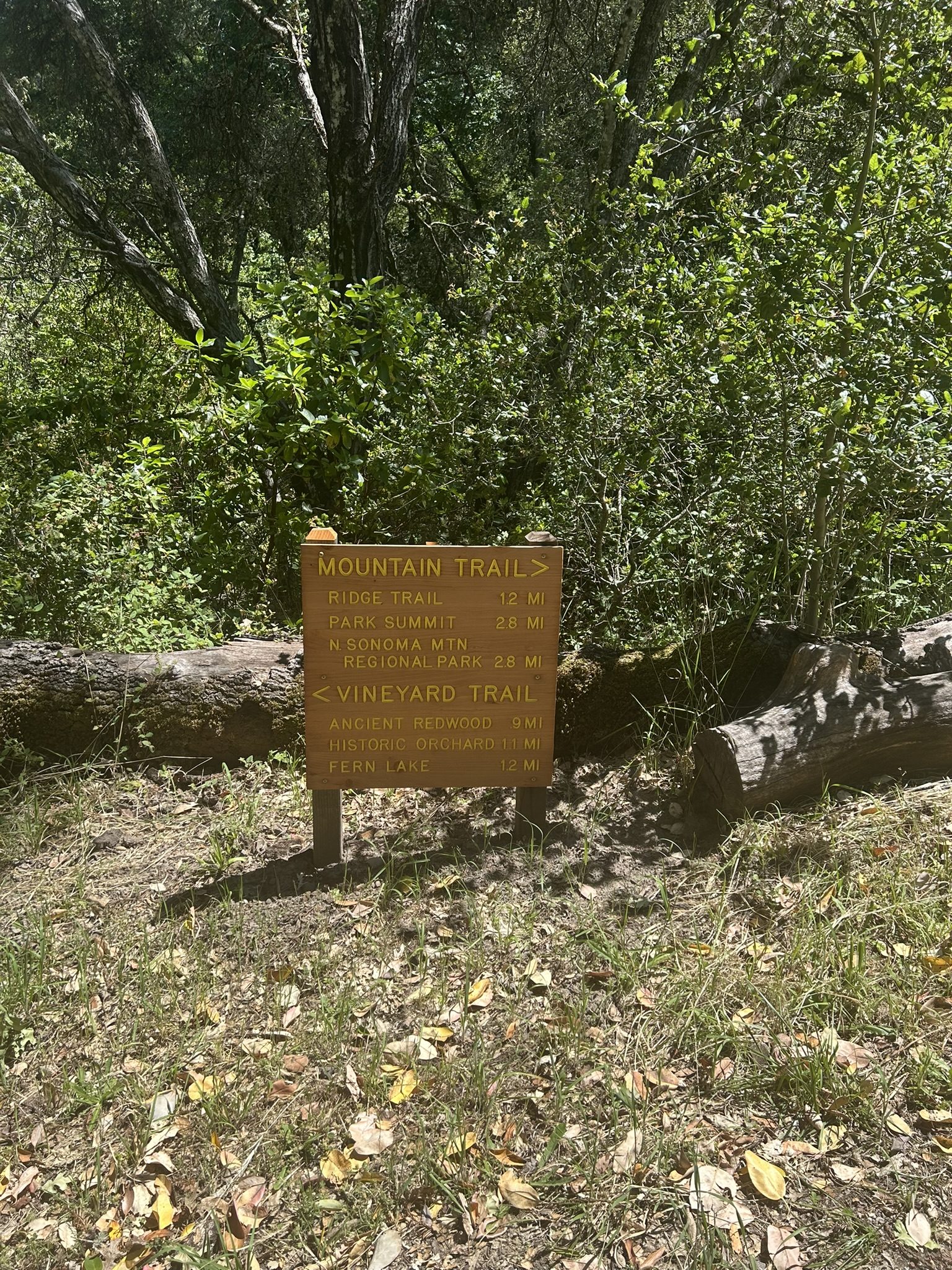
Miles of trails in every direction — next time I'm going all the way to the Park Summit
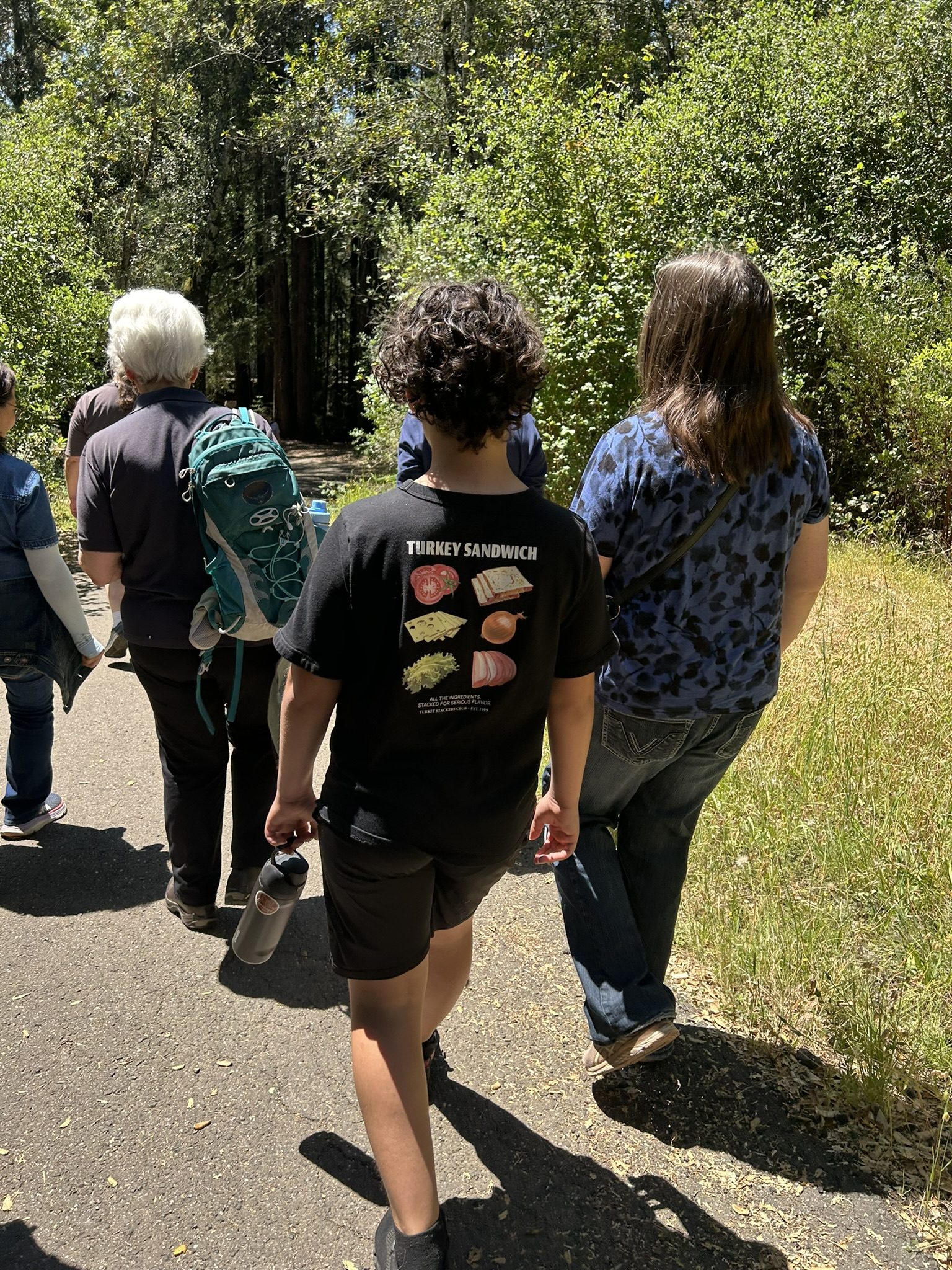
The crew heading down the trail. Generation Alpha fashion game: strong. Phone awareness: TBD. 😄
After the park, swing through Glen Ellen village for lunch. The Glen Ellen Village Market is right there and is perfect for stocking up on provisions (or a good sandwich). If you want to extend the day, you're in the middle of some excellent Sonoma Valley wine country — Benziger Family Winery is nearby and one of the most scenic tasting experiences in the region.
Jack London State Historic Park is the kind of place that makes you want to go home and read everything the man ever wrote. Which, given that he wrote over 50 books, is quite a rabbit hole. Worth every minute of it.
Oh — and on the trail back from the Wolf House, I had one more encounter that felt entirely appropriate for a park named after the author of The Call of the Wild.
A gopher snake crosses the trail on the walk back from the Wolf House — London's spirit, perhaps? 🐍
The Call of the Update
Walking the grounds of Jack London's Beauty Ranch this month, I found myself thinking — as one does — about HPE ProLiant DL360 Gen11 hosts and the particular brutality of patching VMware ESXi 8 with SPP, vibsdepot, and vSphere Lifecycle Manager. Jack London wrote about men tested by wild and unforgiving environments. He would have understood the datacenter.
In his honor, I committed this month's hard-won patch lessons to prose — in the only style that felt worthy of the experience.
If that resonated, you've likely lost a night or two to a botched remediation. If you want the straight technical breakdown of the SPP update workflow for DL360 Gen11 + ESXi 8, drop me a note — happy to write that up properly.
Until next month — stay curious, keep exploring. 🌲
— Robert